
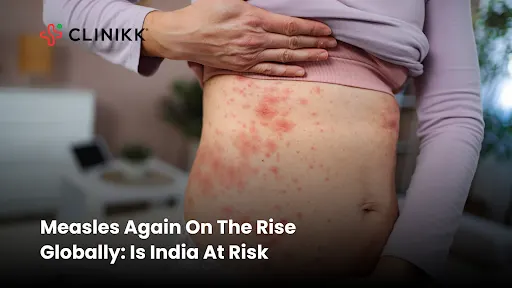
Measles is back. After decades of progress, the disease is resurfacing in countries we thought had eliminated it. Texas had an outbreak. Michigan reported cases. Bangladesh faced a devastating measles outbreak, with children dying. And India? We're watching closely, but we're also vulnerable. The question isn't if measles will reach India.
What Is Measles and Why Should India Care?
Measles is a highly contagious viral infection caused by the measles virus. It spreads through respiratory droplets when an infected person coughs or sneezes. The disease is so contagious that if one unvaccinated person is exposed, 90% of nearby unvaccinated people will catch it. That’s why understanding what measles is matters for every parent, every healthcare worker, and every person in India.
The measles disease spreads through the air.
One infected person can infect 12-18 others in an unvaccinated population.
In countries with low vaccination rates, which describes parts of India, this transmission speed becomes catastrophic.
We’ve seen this play out: Bangladesh experienced a measles outbreak killing 98 children in three weeks.
These weren’t isolated cases.
They were preventable deaths from a disease we have the power to stop.
Measles in adults presents differently than in children, but it’s equally serious. Adults with measles face higher risks of complications, including pneumonia and encephalitis. The disease doesn’t discriminate by age once you’re exposed to the measles virus.
Also read: Typhoid Vaccine: Who Needs It and Why It Matters
Measles Symptoms: What Parents and Adults Need to Recognize
Symptoms of measles appear 10-14 days after exposure. Early signs include fever, cough, runny nose, and red eyes, symptoms that look like a common cold. This is when measles is most contagious, and most people don’t realize they have measles yet.
The characteristic measles rash appears 3-4 days after fever begins. It starts on the face and spreads downward to the body. The rash looks like small red spots that blend, covering large areas of skin. Before the rash appears, you might see Koplik spots, tiny white spots inside the mouth. These are the telltale signs that measles rash is coming.
What do measles look like? The rash is distinctive but often confused with other conditions. It’s a blotchy red rash that doesn’t blanch (turn white) when you press it. Measles rash vs. rubella rash is an important distinction: rubella rash is finer and lighter; measles rash is heavier and more pronounced.
In adults, measles symptoms can be severe. Adult vaccination for measles protection matters because unvaccinated adults face serious complications. Measles in adults often requires hospitalization.
The Global Measles Outbreak: How Did We Get Here?
Measles outbreaks are happening worldwide because vaccination coverage has dropped. Measles outbreak 2025 is a reality in multiple countries. The causes are complex: vaccine hesitancy, decreased healthcare access during COVID-19, and conflict in regions disrupting routine immunization.
Texas measles outbreak. Michigan measles cases. These aren’t isolated. The measles outbreak map shows resurgence across America. Meanwhile, measles in Bangladesh killed dozens of children. Measles in Sri Lanka. Measles in Pakistan. The virus is spreading because it only needs one thing: unvaccinated people.
The measles death rate varies by healthcare access and nutritional status. In developed countries, measles deaths are rare. In developing regions where malnutrition is common, measles death becomes likely. Children under five face the highest mortality risk.
Is India At Risk? A Realistic Assessment
India has made progress with measles vaccination. Our routine immunization program includes the MMR vaccine (measles, mumps, rubella). But coverage remains uneven. Urban areas have higher vaccination rates; rural areas lag. This creates pockets of vulnerability.
Measles in India exists in these gaps. We’ve had sporadic cases, but not large outbreaks recently. However, the global measles outbreak pattern shows what happens when vaccination coverage drops. If measles reaches India with our current vaccination gaps, we could face a crisis.
The risk is real because:
-
Vaccination coverage isn’t universal
-
Medical misinformation about the measles vaccine spreads online
-
Seasonal migration brings people from high-risk areas
-
Measles exposure from international travel is increasing
India isn’t currently facing a large-scale measles outbreak, but we’re not immune to the global resurgence.
Also read: Nipah Virus in India: Symptoms, How It Spreads, and When You Should See a Doctor
Measles Vaccine: Your Protection and What You Need to Know
The measles vaccine is remarkably effective. One dose provides 97% protection. Two doses (as in the MMR schedule) provide 99% protection. This is why measles vaccine age recommendations matter. Vaccinate children at 12-15 months and again at 18 months for maximum protection.
How long does the measles vaccine last? The protection is lifelong for most people. The MMR vaccine provides permanent immunity. This is why it is rare that you can get measles if vaccinated; breakthrough cases are extremely uncommon.
Measles vaccine schedule in India: Children receive the first MMR dose at 12-15 months and the second at 18 months. This timing allows early protection during vulnerable years.
The measles rubella vaccine side effects are mild. Common side effects include arm soreness, low fever, or rash, all temporary and far less serious than actual measles. The vaccine has prevented millions of deaths worldwide.
When did the measles vaccine come out? The first measles vaccine was developed in 1963. Since then, it has prevented an estimated 21 million deaths. This is one of medicine’s greatest achievements.
How Is Measles Spread and Prevention Strategies
How measles is spread is straightforward: through respiratory droplets from coughing or sneezing. Measles exposure happens through air, making it exceptionally contagious. Being in the same room as someone with measles carries risk.
Prevention strategies:
-
Vaccination (most important)
-
Maintaining herd immunity (when 95%+ are vaccinated, outbreaks can’t spread)
-
Isolation of infected individuals
-
Proper hygiene (hand washing, respiratory etiquette)
Can you get measles twice? Extremely rarely. After natural infection or vaccination, immunity is permanent. The measles virus doesn’t reinfect immune people.
Measles in Children vs. Adults: Understanding the Difference
Childhood measles symptoms include the classic triad: fever, cough, and characteristic rash. Children usually recover within 2 weeks without complications if well-nourished and otherwise healthy.
Measles in adults is more serious. Adult vaccination measles protection prevents this, but unvaccinated adults face real risk. Do adults get the measles? Yes, and it’s often more severe. Adults experience higher fever, more intense malaise, and greater complication risk.
Measles vaccination in adults is important for anyone unsure of their immunity. A simple blood test can confirm immunity. If you’re unvaccinated or unsure, getting vaccinated is the answer.
Also read: Flu Alert in Bangalore: H1N1, H3N2, and RSV on the Rise – Here’s How to Stay Safe
Measles Treatments and Management
Is measles deadly? Rarely in well-nourished populations with access to healthcare. The measles death rate in developed countries is low, but complications can still occur.
Measles treatment is supportive because there is no antiviral cure.
Treatment includes:
-
Rest and hydration
-
Fever management
-
Nutritional support
-
Treating secondary infections
-
Hospitalization if complications develop
Most people recover naturally with proper care.
What Clinikk Health Hub Can Do?
If you suspect measles exposure or have symptoms, professional evaluation matters. Clinikk Health Hub provides comprehensive measles assessment, including symptom evaluation, testing when needed, and guidance on isolation and care.
For vaccination, Clinikk offers MMR vaccination counseling and administration. If you’re unsure about your immunity status, we can test for antibodies and create a vaccination plan. For adults traveling or concerned about measles exposure, we provide risk assessment and preventive vaccination.
If measles complications develop, such as pneumonia, encephalitis, or severe dehydration, early medical care prevents serious outcomes. Clinikk’s doctors can evaluate severity and recommend hospitalization if needed.
Your Role in Preventing Measles in India
Measles prevention starts with individual action: ensure you and your children are vaccinated. Check your vaccination records. Vaccinate your children on schedule. If you’re an adult unsure of your measles immunity, get tested and vaccinated if needed.
Beyond personal protection, support broader vaccination efforts. Encourage vaccination in your community. Combat vaccine misinformation with facts. The global measles outbreak shows what happens when vaccination coverage drops. India can avoid this if we maintain high vaccination rates.
Measles is preventable. The vaccine works. The risk is real, but so is the solution.
Frequently Asked Questions
What is measles exactly and how contagious is it?
Measles is a viral infection spreading through respiratory droplets. It’s extremely contagious, one infected person infects 12-18 others in unvaccinated populations.
What does measles look like and how do I recognize it?
Measles rash is a blotchy red rash covering large areas, starting on the face and spreading downward. Koplik spots (white spots in the mouth) appear before the rash. The rash doesn’t blanch when pressed.
What are measles symptoms in children vs. adults?
Children experience fever, cough, rash, and red eyes. Adults have more severe fever, body aches, and higher complication risk. Both groups are contagious during fever and for 4 days after rash appears.
How is measles spread and how long is someone contagious?
Measles spreads through respiratory droplets. Infected people are contagious 4 days before rash appears until 4 days after it starts, meaning they spread it unknowingly.
Can you get measles if vaccinated?
Extremely rare. Vaccinated people have 99% protection with two doses. Breakthrough cases are uncommon and usually mild.
What is the measles vaccine schedule and when should I vaccinate?
First dose at 12-15 months, second dose at 18 months. This is India’s standard schedule. Unvaccinated adults should get both doses.
Is there a measles outbreak in India right now?
Currently, no large-scale measles outbreak in India. However, global resurgence creates risk, especially in areas with low vaccination coverage.
Can adults get measles and is it more serious?
Yes. Unvaccinated adults can get measles, and it’s often more severe than in children. Adult vaccination measles protection prevents this risk.
What is the cure or treatment for measles?
No specific cure exists. Measles treatment is supportive: rest, fluids, fever management, and vitamin A supplementation. Most people recover naturally.
Is measles deadly and what’s the death rate?
Measles can be fatal, especially in malnourished children or people with complications. Death rate ranges depending on healthcare access, nutrition, and vaccination status.