
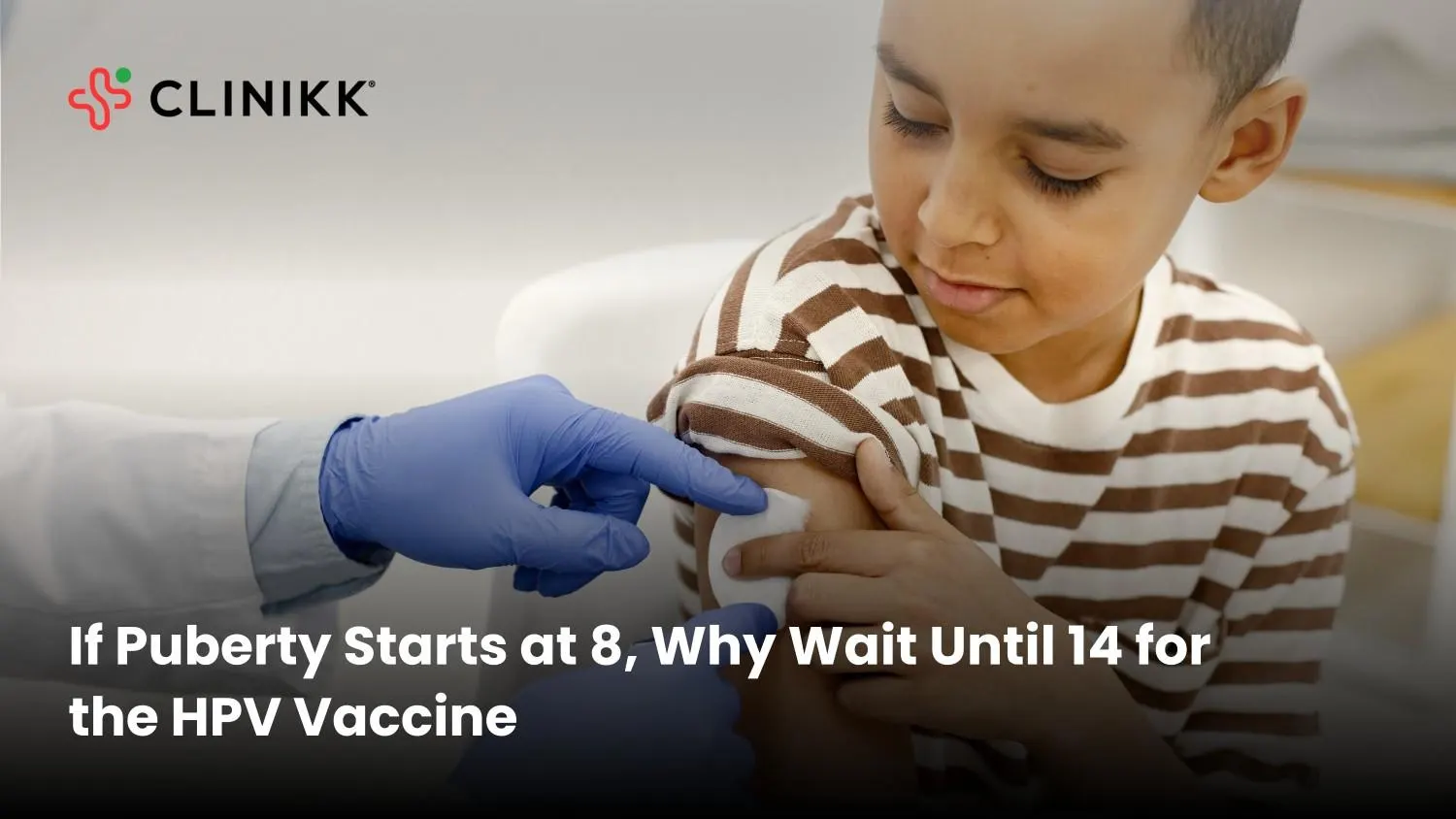
India is launching a nationwide free HPV vaccination program using single-dose Gardasil for girls aged 9 to 14, administered through government health centres, schools, and Ayushman Arogya Mandirs. The Union Cabinet approved the rollout in February 2026, making India the 161st country to add the HPV vaccine to its national immunisation schedule.
India is launching a nationwide free HPV vaccination program using single-dose Gardasil for girls aged 9 to 14, administered through government health centres, schools, and Ayushman Arogya Mandirs. The Union Cabinet approved the rollout in February 2026, making India the 161st country to add the HPV vaccine to its national immunisation schedule.
The programme will cover approximately 8 crore girls over three years, about 2.6 crore in the first year alone.
The quadrivalent Gardasil vaccine protects against HPV types 16 and 18 (which cause over 80% of cervical cancers) and types 6 and 11 (which cause genital warts).
The single-dose approach follows WHO’s Strategic Advisory Group of Experts (SAGE) recommendation, supported by evidence from the UK and Canada showing comparable antibody levels between single-dose and two-dose regimens.
This matters because cervical cancer is the second most common cancer among Indian women, with roughly 1.25 lakh new cases and over 42,000 deaths every year. One Indian woman dies of cervical cancer approximately every seven minutes. Almost all of these deaths are preventable.
If Puberty Starts at 8, Why Does the Programme Target Age 14?
This is the question parents are rightly asking, and the answer involves a gap between the medical ideal and the logistical reality of a nationwide rollout.
Medically, the HPV vaccine can be given starting at age 9. The CDC, WHO, the American Academy of Paediatrics, and the Indian Academy of Paediatrics all approve vaccination from age 9 onward. Research published in PMC shows that starting the HPV vaccine series at age 9 to 10 leads to significantly higher on-time completion rates and a stronger immune response compared to starting at 11 to 12.
Precocious puberty, defined as the onset of secondary sexual characteristics before age 8 in girls, is increasingly documented in Indian paediatric clinics.
Even among girls with typical pubertal timing, breast development commonly begins between ages 8 and 10.
Since HPV vaccination works best before any potential exposure to the virus, the medical logic strongly favours vaccinating as early as possible within the 9 to 14 window.
So why 14?
The government programme is structured as a phased catch-up campaign.
Starting with 14-year-olds captures the oldest eligible girls before they age out of the optimal window.
The plan includes progressively covering younger cohorts and eventually integrating the vaccine into the routine immunisation calendar at age 9.
It’s a pragmatic rollout strategy, not a medical recommendation that 14 is the ideal age.
Also read: Varicella (Chickenpox) Vaccine: Benefits and Who Should Get It
The takeaway for parents: don’t wait for the government programme to reach your daughter’s age group. The vaccine is available privately at paediatric clinics and hospitals for girls as young as 9. The earlier, the better.
How Effective Is the HPV Vaccine at Preventing Cervical Cancer?
The HPV vaccine prevents 93% to 100% of cervical cancers caused by HPV types 16 and 18, based on clinical trials covering over 16,000 women across five continents with follow-up extending beyond 5 years.
Studies from Sweden and England published in 2020 and 2021 demonstrated that teenage girls who received the HPV vaccine had an over 85% reduction in cervical cancer risk by age 30. Globally, more than 500 million doses have been administered since 2006. The vaccine is non-live, it cannot cause HPV infection and has been approved by India’s drug regulatory authority (CDSCO).
The WHO identifies HPV vaccination as a central pillar of the global strategy to eliminate cervical cancer. Vaccination alone doesn’t replace screening, though. Even vaccinated women should continue regular cervical screening (Pap smear or HPV DNA testing) starting from age 25 or as recommended by their gynaecologist.
What About Side Effects? Should Parents Be Concerned?
HPV vaccine side effects are mild and temporary in the vast majority of recipients, consistent with the safety profile of other routine adolescent vaccines like Tdap and meningococcal vaccines.
Common side effects include soreness or redness at the injection site, mild headache, fatigue, and occasional dizziness. Fainting can occur in adolescents (as with any injection), which is why medical teams observe recipients for 15 to 30 minutes post-vaccination.
Severe allergic reactions (anaphylaxis) are extremely rare, roughly 1 to 2 cases per million doses, and are manageable in a supervised clinical setting. No credible evidence links the HPV vaccine to long-term adverse effects. The vaccine does not cause infertility, autoimmune disease, or early sexual activity, all myths that persist despite decades of global safety data.
A scoping review of 37 studies on HPV vaccination barriers in India, published in the Indian Journal of Medical Research (2026), found that vaccine hesitancy was driven primarily by lack of awareness, cultural misconceptions, and the persistent myth that the HPV vaccine encourages sexual behaviour. None of these concerns is supported by clinical evidence.
Also read: Stomach Flu Outbreak in Bengaluru: A Safety Guide by Clinikk Health Hub
Who Should Get the HPV Vaccine and When?
The HPV vaccine is recommended for all girls (and ideally boys) starting at age 9, with the following schedule:
Ages 9 to 14
1 to 2 doses (single dose now endorsed by WHO SAGE for girls in this age group). This is the ideal window, strongest immune response, fewest doses needed, and vaccination occurs well before any likely HPV exposure.
Ages 15 to 26
3 doses over 6 months are required because the immune response is less robust than in younger recipients. Still highly beneficial, getting vaccinated late is far better than not getting vaccinated at all.
Ages 27 to 45
Shared clinical decision-making with your doctor. The vaccine can still benefit adults who haven’t been previously exposed to the HPV types covered, but efficacy is lower. The vaccine is not recommended after age 45.
Immunocompromised Individuals (Ages 9 to 26)
Require 3 doses regardless of age at initiation.
What Should You Do Right Now?
No grand claims here.
Just three clear steps.
If Your Daughter Is Between 9 and 14
Talk to her paediatrician about getting the HPV vaccine now, whether through the upcoming government programme (free, single-dose Gardasil) or through a private clinic.
Waiting for the government rollout to reach her specific age cohort means losing months or years of potential protection.
If Your Daughter Is 15 to 26 and Unvaccinated
She still benefits significantly from the vaccine.
She’ll need 3 doses instead of 1 or 2, but the protection against cervical cancer is worth the extra visits.
If You’re an Adult Woman
Vaccination and screening are complementary, not interchangeable.
Even if you’ve been vaccinated, regular Pap smears or HPV DNA tests from age 25 onward remain essential.
If you haven’t been vaccinated and you’re under 45, talk to your gynaecologist.
At Clinikk Health Hub, we offer HPV vaccination for girls and women across the recommended age groups, along with cervical cancer screening packages that include Pap smear and HPV DNA testing. Our paediatric and gynaecology teams can help you understand the right timing, dosing, and screening schedule based on your daughter’s age and medical history.
The HPV vaccine is one of the very few vaccines that directly prevent cancer. The science is settled. The access is expanding. The only variable left is whether families act on it.